Plumbing systems in commercial buildings work every day, often without much attention until something goes wrong. A backed-up drain, a leaking pipe, or a failed water line can stop business operations fast. When that happens, repairs are rarely simple or inexpensive.
Regular plumbing inspections help reduce those risks. The question many property owners ask is how often inspections should be scheduled. The answer depends on building size, usage, and the type of business operating inside. The Pine Plumbing works with commercial clients who want fewer surprises and better control over repair costs. Jaime Garcia is more than happy to help with a quote at (323) 346-4472.
Why Plumbing Inspections Matter for Commercial Buildings
Commercial plumbing systems handle far more use than residential ones. Restrooms serve dozens or hundreds of people daily. Break rooms, kitchens, floor drains, and supply lines all work together throughout long business hours.
Small issues can stay hidden until they become serious problems. A slow drain may signal a blockage forming deep in the line. A minor pressure change may point to a failing valve or pipe.
Plumbing inspections help catch these issues early, before they interrupt business or damage the property.
The Cost of Skipping Regular Inspections
Some property owners wait until there is a visible issue before calling a plumber. By that point, damage has often spread beyond the original problem.
Skipping inspections can lead to:
- Water damage behind walls or under floors
- Mold growth from hidden leaks
- Emergency service calls during business hours
- Temporary shutdowns that affect staff and customers
These problems often cost far more than routine inspections. The Pine Plumbing works with clients who want to stay ahead of repairs instead of reacting to them.
General Inspection Guidelines for Commercial Properties
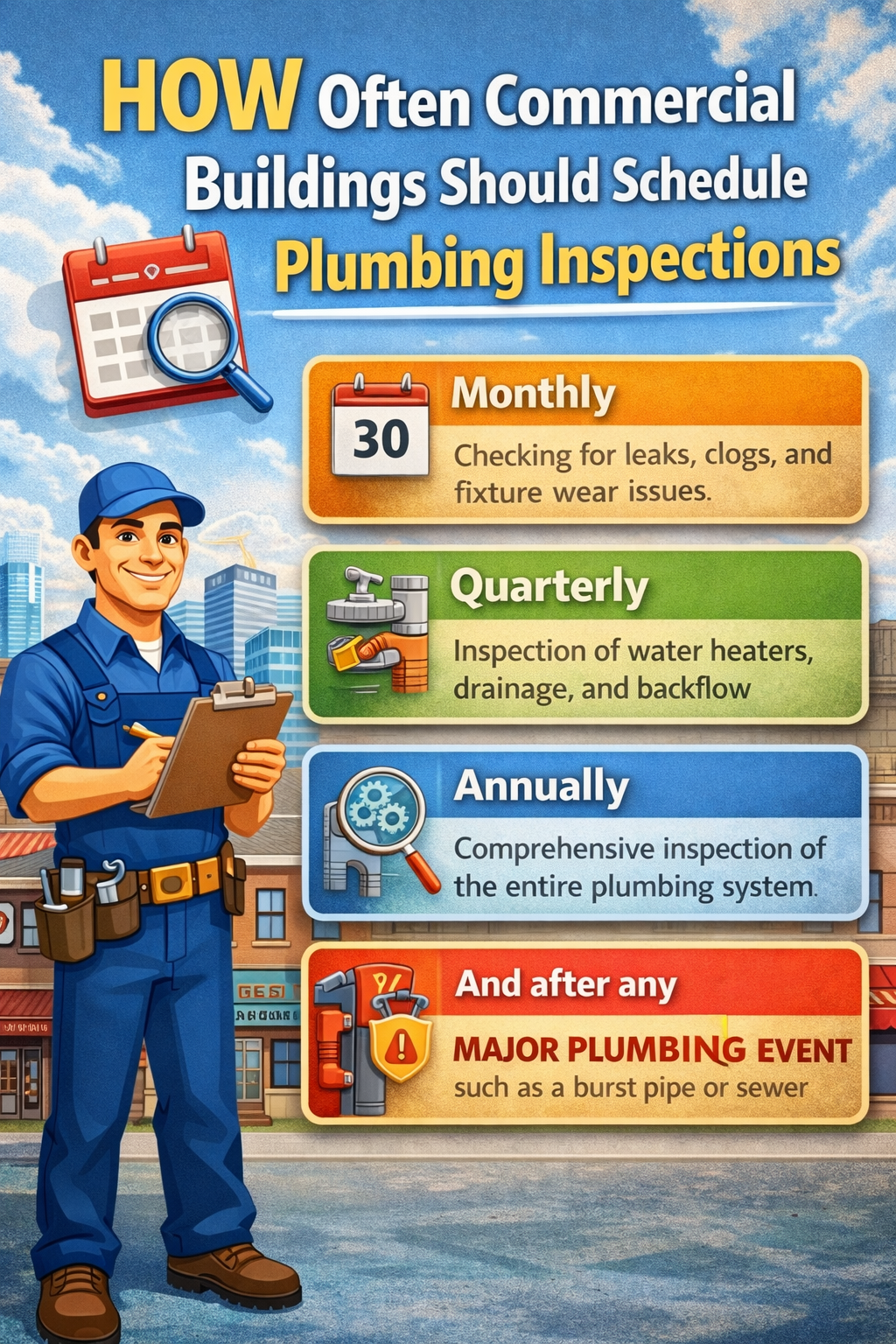
While every building is different, most commercial properties benefit from plumbing inspections at least once per year. Some buildings require more frequent checks due to heavy use or specialized plumbing systems.
Here is a general breakdown.
Annual Plumbing Inspections for Most Commercial Buildings
Office buildings, retail spaces, and professional facilities often schedule plumbing inspections once a year. These inspections focus on overall system condition and early signs of wear.
An annual inspection may include:
- Checking visible pipes and fittings
- Reviewing water pressure levels
- Inspecting drains for early blockages
- Examining shutoff valves
- Looking for signs of leaks or corrosion
For many businesses, this schedule helps catch issues before they affect daily operations.
If you manage a commercial building and want to set up an annual inspection, Jaime Garcia can be reached at (323) 346-4472.
Semi-Annual Inspections for High-Use Buildings
Buildings with heavier daily use often need inspections twice a year. This includes:
- Restaurants
- Warehouses
- Medical offices
- Schools
- Multi-tenant buildings
In these settings, plumbing systems face constant demand. Grease, waste buildup, and frequent water use increase the chance of clogs and wear.
Semi-annual inspections allow plumbers to address early warning signs and reduce the chance of emergency calls.
Quarterly Inspections for Specialized Facilities
Some commercial buildings require even more attention. Facilities with kitchens, manufacturing processes, or large restrooms may benefit from quarterly inspections.
Examples include:
- Food processing facilities
- Large distribution centers
- Industrial spaces
- Buildings with floor drains used daily
These inspections focus on drains, supply lines, and areas exposed to repeated stress.
The Pine Plumbing helps property managers set inspection schedules based on real usage, not guesswork.
What Happens During a Commercial Plumbing Inspection
A plumbing inspection is more than a quick look under sinks. It involves reviewing key system components that affect performance and safety.
During an inspection, plumbers may:
- Check drain flow and venting
- Look for leaks in exposed and accessible areas
- Review water pressure readings
- Test shutoff valves
- Inspect water heaters and supply lines
- Identify code concerns
Findings are discussed with the property owner or manager so decisions can be made before problems grow.
For inspection details or pricing, call (323) 346-4472 and ask for Jaime Garcia.
Building Age Plays a Role in Inspection Frequency
Older commercial buildings often need more frequent plumbing checks. Pipes installed decades ago may be made of materials that wear faster or no longer meet code standards.
Common issues in older buildings include:
- Pipe corrosion
- Reduced pipe diameter from buildup
- Aging valves
- Outdated drainage layouts
Regular inspections help track these conditions and plan repairs instead of dealing with sudden failures.
Tenant Turnover Can Affect Plumbing Systems
When tenants change, plumbing usage often changes too. A retail space may turn into a restaurant. An office may add staff. These shifts place new demands on existing systems.
Scheduling a plumbing inspection during tenant changes helps verify that systems can handle the new use. This can prevent backups, pressure problems, and code issues.
The Pine Plumbing works with property managers during tenant transitions to review plumbing needs and make adjustments when needed.
Inspections Help With Budget Planning
Unexpected plumbing repairs are hard to budget for. Emergency work often costs more due to urgency and disruption.
Regular inspections help property owners plan repairs ahead of time. Instead of facing surprise failures, issues can be addressed during scheduled maintenance windows.
This approach allows better cost control and fewer interruptions to business operations.
Plumbing Inspections Support Code Compliance
Commercial buildings must follow local and state plumbing codes. These rules cover pipe sizing, venting, backflow protection, and drainage design.
Inspections help identify code concerns before official inspections or complaints occur. Addressing these issues early helps avoid fines and delays.
If you have concerns about compliance, Jaime Garcia at (323) 346-4472 can review your building’s plumbing setup.
Emergency Calls Are More Disruptive Than Planned Inspections
Emergency plumbing calls often happen at the worst possible time. A leak during business hours or a sewer issue during peak operation can bring work to a stop.
Planned inspections reduce the chance of these situations. While no system is perfect, regular checks help lower the risk of sudden failures.
The Pine Plumbing focuses on helping clients keep plumbing systems working as intended through routine attention.
How Inspections Protect Tenants and Staff
Plumbing issues affect everyone inside a building. Restroom closures, water shutdowns, or leaks create frustration and safety concerns.
Inspections help keep:
- Restrooms usable
- Water supply steady
- Drains clear
- Work areas dry
This supports a better environment for tenants, employees, and customers.
Why Commercial Property Owners Choose The Pine Plumbing
Commercial clients choose The Pine Plumbing because the work is handled with care and follow-through.
Property owners value that:
- Inspections are thorough and clear
- Findings are explained in plain language
- Repairs are recommended based on real conditions
- Jobs are not left unfinished
From routine inspections to repair planning, the focus stays on long-term building performance.
Setting the Right Inspection Schedule for Your Building
There is no single inspection schedule that fits every commercial property. Building size, usage, age, and tenant activity all matter.
The best way to set the right schedule is to speak with a plumbing professional who understands commercial systems.
Jaime Garcia is more than happy to help with a quote and inspection planning at (323) 346-4472.
Final Thoughts: Inspections Are a Smart Part of Property Care
Plumbing systems quietly support every part of a commercial building. When they fail, the impact is immediate and costly.
Regular plumbing inspections help reduce risk, control repair costs, and support daily operations. Whether your building needs annual, semi-annual, or more frequent checks, staying proactive makes a real difference.
If you manage or own a commercial property and want dependable plumbing service, The Pine Plumbing is ready to help.
Call (323) 346-4472 and speak with Jaime Garcia about inspection options and pricing.