Running a restaurant or food facility in California means following some of the strictest rules in the country. Health departments, building inspectors, and local agencies all play a role in how plumbing systems must be designed, installed, and maintained. When plumbing does not meet requirements, inspections fail, permits are delayed, and businesses can be forced to stop operations.
Plumbing in food facilities is about more than water supply and drainage. It directly affects food safety, employee hygiene, and customer health. The Pine Plumbing works with restaurant owners who want systems that pass inspections and support daily operations. Jaime Garcia is more than happy to help with a quote at (323) 346-4472.
Why California Is Stricter Than Many Other States
California places a strong focus on public health. Because food facilities handle ingredients, waste, and water throughout the day, plumbing systems are closely regulated.
Local health departments inspect plumbing during:
- New restaurant openings
- Remodels or tenant changes
- Routine health inspections
If plumbing does not meet code, permits can be delayed or revoked. This can stop a restaurant from opening or force changes after work has already been completed.
Working with a plumbing company that understands California requirements helps avoid these setbacks.
Handwashing Sinks Are Mandatory and Closely Regulated
Handwashing sinks are one of the most inspected plumbing items in restaurants. Health codes require these sinks in specific locations so staff can wash hands without obstruction.
Common rules include:
- Separate sinks for handwashing only
- Hot and cold water supplied
- Soap and towel dispensers nearby
- Easy access without passing through food prep zones
Using a sink for multiple purposes can lead to violations. The Pine Plumbing installs handwashing sinks in locations that meet inspection standards and support kitchen workflow.
For layout questions or pricing, call (323) 346-4472 and speak with Jaime Garcia.
Grease Traps Are Required in Most Food Facilities
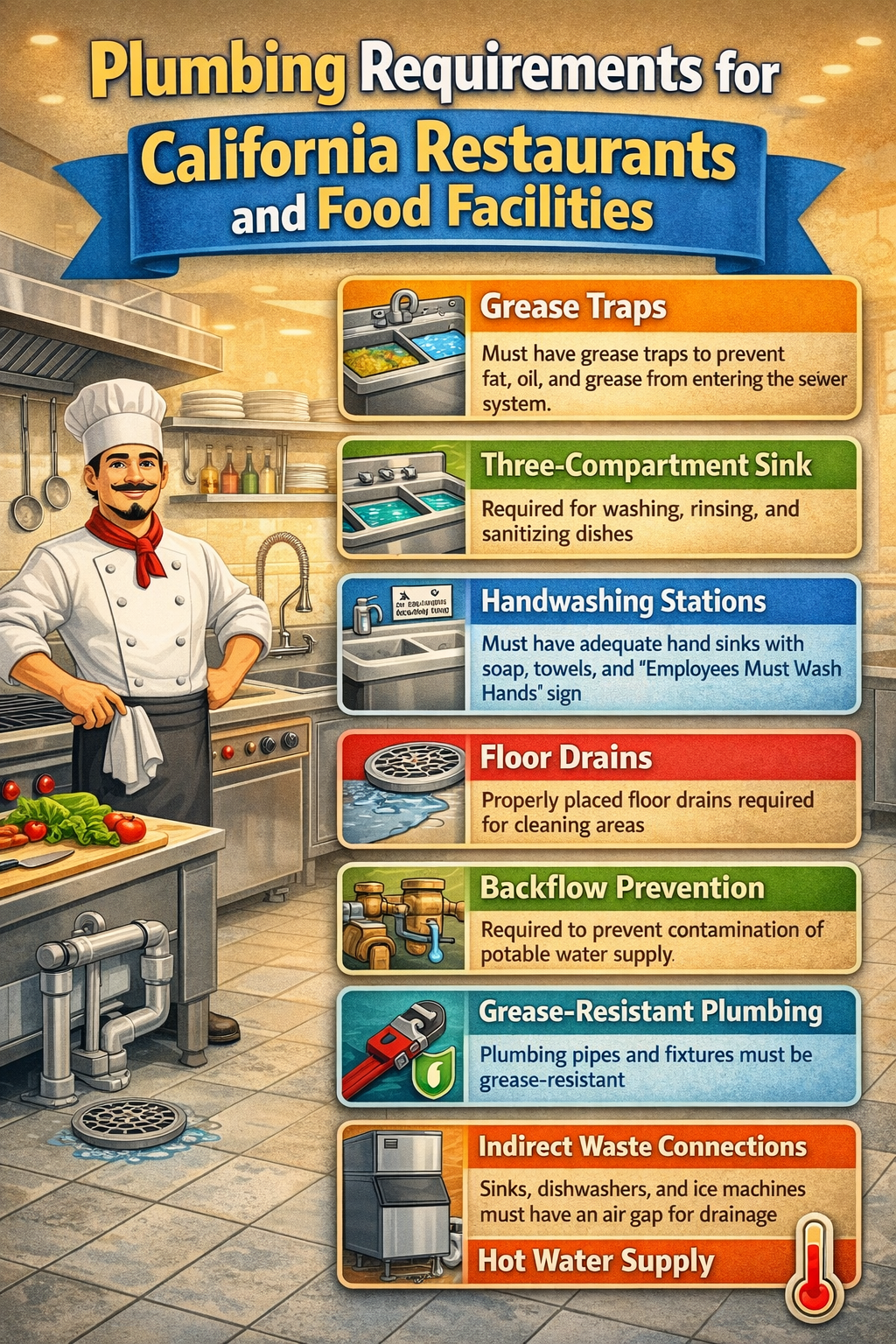
Grease traps are required for restaurants that prepare food using oils or fats. These devices stop grease from entering sewer lines, where it can cause backups and damage.
California inspectors often check:
- Grease trap size
- Installation location
- Access for cleaning
- Maintenance records
An undersized or poorly placed grease trap can cause repeated clogs and failed inspections.
The Pine Plumbing works with restaurant owners to install grease traps that match kitchen output and local requirements.
Floor Drains Are a Key Part of Food Safety
Floor drains help remove water from cleaning, spills, and equipment washdown. In food facilities, these drains must be placed and connected correctly.
Issues inspectors often find include:
- Poor drain slope
- Standing water
- Drain odors
- Improper venting
Drain problems can lead to slip hazards and sanitation concerns. Fixing these issues after the kitchen is in use can disrupt operations.
Planning drain placement early helps avoid costly rework later.
Backflow Prevention Protects the Water Supply
Backflow devices prevent contaminated water from flowing back into clean water lines. In restaurants, these devices are often required on:
- Dishwashers
- Beverage machines
- Hose bibs
- Ice makers
Health and water authorities may require regular testing of backflow devices. Missing or faulty devices can lead to serious violations.
The Pine Plumbing installs and services backflow protection that meets local standards. To schedule service or request pricing, Jaime Garcia can be reached at (323) 346-4472.
Three-Compartment Sinks Have Specific Rules
Most California food facilities must have a three-compartment sink for washing, rinsing, and sanitizing utensils. These sinks must meet size and setup requirements.
Inspections often review:
- Sink compartment size
- Drain connections
- Air gaps
- Water temperature
Improper installation can result in immediate correction notices. The Pine Plumbing installs these sinks to match both plumbing and health code rules.
Dishwashers Must Meet Temperature and Drain Rules
Commercial dishwashers in California must reach certain water temperatures or use approved chemical sanitation. Plumbing must support these requirements.
Common issues include:
- Insufficient hot water supply
- Incorrect drain setup
- Missing air gaps
If dishwashers cannot meet sanitation standards, inspections can fail. Proper plumbing support helps avoid these problems.
Restroom Plumbing Is Closely Reviewed
Restrooms in food facilities are inspected for both plumbing function and layout. Codes cover:
- Fixture count based on occupancy
- Proper drainage
- Venting
- Hot water availability
Restroom issues often affect permit approval and customer satisfaction. The Pine Plumbing works with owners to address restroom plumbing before inspections take place.
Venting Is Often Overlooked but Critical
Plumbing vents allow drains to function properly. In kitchens, poor venting can lead to slow drainage and odors.
Inspectors may flag:
- Missing vents
- Incorrect vent size
- Improper vent connections
Correcting vent issues after walls are closed can be costly. Proper planning helps avoid this problem.
Remodeling a Restaurant Requires Plumbing Review
Many restaurant owners update kitchens or dining areas over time. Even small remodels can trigger plumbing review by local agencies.
Changes that often require plumbing updates include:
- Adding prep sinks
- Moving equipment
- Expanding seating
- Changing menu offerings
Before starting a remodel, it helps to review plumbing requirements with a professional.
Jaime Garcia at (323) 346-4472 can review plans and discuss next steps.
Failed Inspections Can Delay Openings
One of the biggest risks for restaurant owners is a failed inspection just before opening. Plumbing issues are a common cause.
Common reasons for failure include:
- Missing sinks
- Incorrect drain setups
- Lack of backflow protection
- Grease trap problems
These issues can delay opening dates and add unexpected costs.
Working with The Pine Plumbing helps reduce the chance of last-minute corrections.
Ongoing Maintenance Matters for Food Facilities
Once a restaurant is open, plumbing needs regular attention. Grease buildup, heavy water use, and cleaning routines place steady demand on systems.
Routine service helps:
- Keep drains flowing
- Reduce odors
- Spot leaks early
- Support health inspections
For maintenance planning, call (323) 346-4472 and ask for Jaime Garcia.
Why Restaurant Owners Choose The Pine Plumbing
Restaurant owners across California choose The Pine Plumbing because the work is handled with care and accountability.
Clients value that:
- Code rules are taken seriously
- Work is done correctly the first time
- Communication stays clear
- Jobs are not left unfinished
From new restaurant builds to ongoing service, the focus stays on plumbing that supports daily business needs.
Planning Ahead Saves Time and Money
Plumbing problems in food facilities often show up during inspections or busy service hours. Planning ahead helps avoid shutdowns and rushed repairs.
Speaking with a plumbing professional early can help restaurant owners understand requirements and plan work around schedules.
Jaime Garcia is more than happy to help with a quote at (323) 346-4472.
Final Thoughts: Plumbing Plays a Major Role in Restaurant Success
Plumbing is one of the most inspected systems in California restaurants and food facilities. When plumbing meets requirements, inspections move forward and operations stay on track. When it does not, delays and closures follow.
Working with a plumbing company that understands food facility rules helps protect your business and reputation.
If you are opening, remodeling, or maintaining a restaurant, The Pine Plumbing is ready to help.
Call (323) 346-4472 and speak with Jaime Garcia about your plumbing needs.